Why NSW for scandium
• Largest Economic Demonstrated Resource (EDR) in Australia
• Some of the highest-grade deposits in the world
• Hosts the world’s sole scandium-only resource
Overview
The main uses of scandium are for scandium-aluminium alloys and solid oxide fuel cells (scandium oxide).
Scandium-aluminium alloys are lightweight, strong, corrosion and heat resistant, malleable, good conductors of electricity and heat and require as little as 0.5% scandium. They are used in aircraft, spacecraft, sporting goods, ceramics, electronics, lasers, radioisotopes, and medical applications.
Scandium is abundant in Earth’s crust but deposits that are economic to extract are very rare. Australian scandium mineralisation is typically found in nickel-cobalt deposits and sometimes associated with rare earth elements.
Australia has an EDR of nearly 37,000 tonnes of scandium, with 74% in NSW (Source: OzMin database, Geoscience Australia). NSW has deposits that could produce scandium as a primary product or co-product and could lead to the development of new and larger scandium markets.
Total world scandium production was less than 40 tonnes in 2022 (Source: USGS), in the form of scandium oxide, and historically it was produced exclusively as a by-product of other mineral production. This small volume and lack of reliable and secure long-term supply has meant scandium oxide is generally traded between companies rather than in the market.
Demand for scandium is expected to increase to over 110 tonnes a year by 2026, driven by increased use of scandium-aluminium alloys and solid oxide fuel cells (Source: NioCorp).
NSW resource
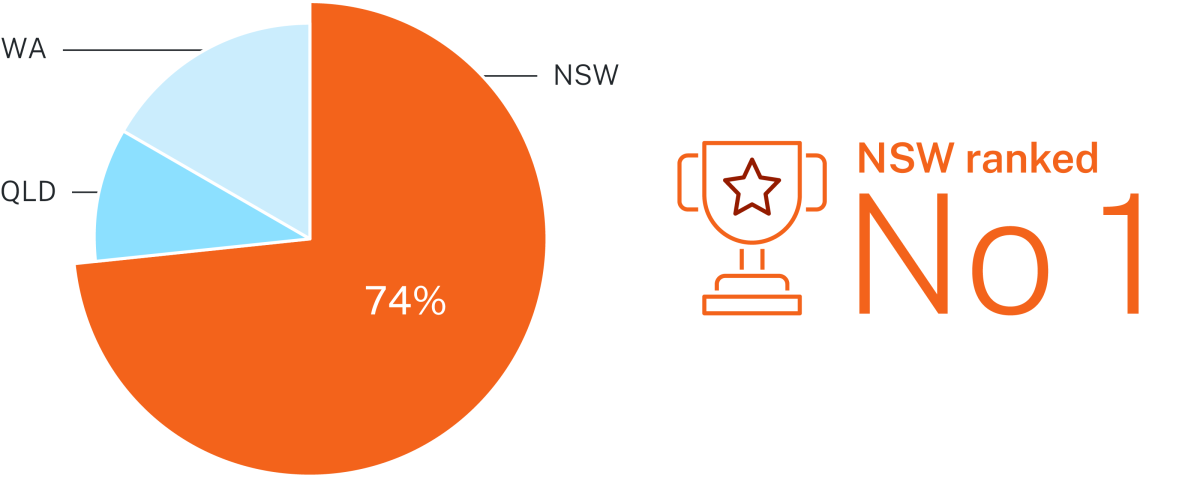
NSW has the highest concentration of scandium in the world, making it one of the only locations where scandium can be mined as a primary commodity.
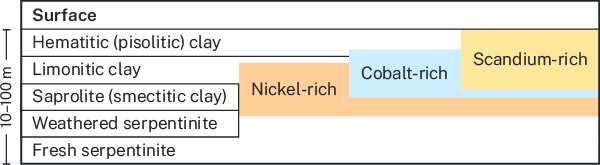
Scandium occurs with nickel-laterite deposits, in areas of deep weathering of ultramafic rocks – most notably the Fifield Igneous Complex in central NSW and the Great Serpentinite Belt. Several important projects are associated with the Fifield Igneous Complex, including Sunrise, Burra and Flemington.
Scandium is concentrated in iron-rich clays, usually in the shallowest parts of the laterite deposits.
Tertiary laterite development
Scandium in NSW map
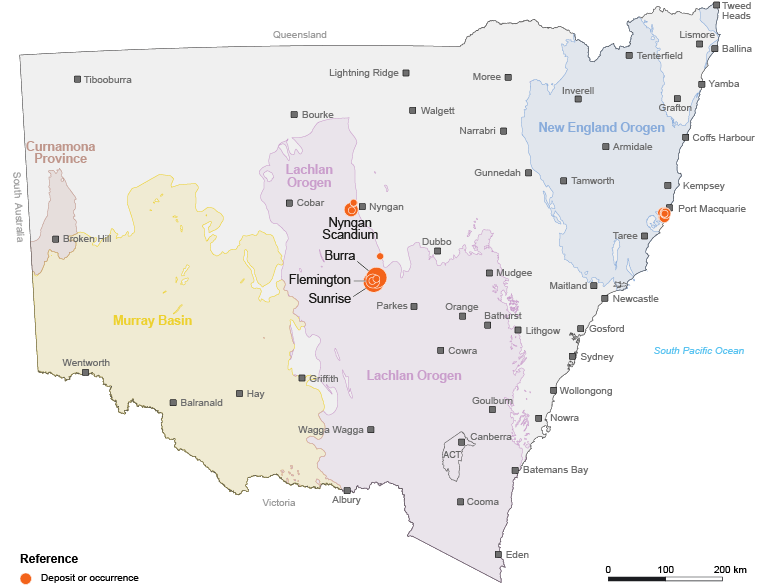
Download the Scandium in NSW map (PDF, 3.1 MB).
Essential uses for scandium alloys

Aerospace |

Ceramics |

Satellites/spacecraft |

Lasers |

Sporting goods |

Electronics |

Medical applications |

Solid oxide fuel cells |
Quality data for explorers
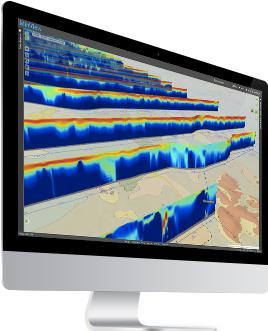
NSW is known for its world class pre-competitive data, and has a long history of providing geological, geoscientific and geochemical data to promote investment in exploration.
Pre-competitive data to support scandium exploration (and other commodities) is made freely available on the Geological Survey of NSW’s web map application MinView.
The NSW Government recently completed its largest ever geophysical survey acquisition program through airborne electromagnetic, airborne magnetic and radiometric, gravity, and deep crustal reflection seismic surveys. These surveys collected over 150,000 km2 of new data across the New England Orogen, the Lachlan Orogen and the Murray Basin areas that are prospective for critical minerals and high-tech metals, including scandium.
Global overview
Scandium resources have been identified in Australia, Canada, China, Finland, Guinea, Kazakhstan, Madagascar, Norway, the Philippines, Russia, South Africa, Ukraine and the United States of America.
Historically, scandium was produced as by-product material in China (iron ore, rare earths, titanium, and zirconium), Kazakhstan (uranium), the Philippines (nickel), Russia (apatite and uranium) and Ukraine (uranium).
China was the leading scandium producing country in 2022 with 10 tonnes, followed by the Philippines (7.5 tonnes), Canada (3.5 tonnes) and Russia (3 tonnes) (Source: USGS).
NSW project highlights
There are several advanced scandium projects in NSW including the Burra Scandium project, Nyngan Scandium project and Sunrise Battery Materials project.
NSW scandium projects offer new sources of stable supply that can stimulate the use of scandium in a wider range of new technologies. There are also further opportunities to explore for value-adding through processing and refining.
| Project |
Contained scandium (t) |
|---|---|
| Burra Scandium |
22,000 |
| Flemington |
1,088 |
| Nyngan Scandium |
3,976 |
| Sunrise Battery Materials Project |
16,200 |
| Note: The contained scandium totals are based on combined resources for that project (the amount of scandium as a metal that is contained within one or more resources). Source: New South Wales MetIndEx database. | |
Notes:
All percentages (including in the pie charts) are rounded to whole numbers.
Forecasts are based on NSW Resources’ interpretation of available information. Forecasts are inherently uncertain and should be seen as a guide only. Actual outcomes may be different.