

Why NSW for cobalt
- Third largest Economic Demonstrated Resource (EDR) in Australia for cobalt resources
- Hosts over 421,000 tonnes of cobalt
- Opportunities for cobalt investment, which is a critical specialty metal with high supply risk
Overview
In 2024, about 30% (66.5 kt) of cobalt demand was for electric vehicle batteries, and is expected to increase to 45% (143.1 kt) of market demand by 2030 (Source: IEA). Many rechargeable batteries use cobalt as it increases battery energy density, lifespan and charging speeds. Despite lower prices in 2023 for cobalt (and lithium), demand for electric vehicles and other battery-using technology is expected to increase the price of cobalt over the medium term.
There are a range of uses for cobalt including in magnetic, wear-resistant, high strength, high temperature superalloys. Cobalt is used in jet engines and gas turbines, in permanent magnets, steam turbines, surgical implants and high-speed tool steel. Cobalt metal is a catalyst for producing plastics, liquid fuels and certain adhesives amongst other applications.
Pure cobalt rarely occurs naturally on Earth. It is found in copper and nickel ores and complex processing methods are required to extract and concentrate cobalt.
Cobalt is traded as cobalt metal and cobalt chemical products — typically cobalt sulfate and cobalt hydroxide — and to refineries as concentrates, hydroxide and metal hydroxide precipitate.
Most cobalt is produced in the Democratic Republic of Congo (DRC) from mines with limited environmental, social and corporate governance standards, and sent to China where it is processed. In 2024, the DRC produced 181.8 kt of cobalt (66.5% of global production), while China refined 196.1 kt of cobalt (78% of global refined cobalt) (Source: IEA).
NSW resource

NSW ranks third in Australia for cobalt resources, holding 14% of Australia’s Economic Demonstrable Resources (Source: Geoscience Australia, Australia's Identified Mineral Resources 2024).
Occurrences of cobalt in NSW include nickel-cobalt laterites in the Lachlan Orogen and cobalt pyrite in the Far West region of the state. Albite-pyrite rocks near Broken Hill host the Pyrite Hill and Railway deposits (Cobalt Blue’s Broken Hill Cobalt Project), their simple mineralogy makes these deposits amenable to cobalt recovery Cobalt has recently been discovered in quartz magnetite rocks in the Reef Tank and Fence Gossan deposits (Broken Hill East Project) around Broken Hill.
Nickel-cobalt laterite-hosted deposits are developed over ultramafic rocks, including the Fifield Igneous Complex, and hosts many major deposits including Sunrise, Burra, Flemington, Fifield, Homeville, West Lynn, Summervale and the Great Serpentinite Belt (e.g. Adanaree and Thuddungra).
Cobalt has historically been produced as a by-product of smelting base-metal ore at Broken Hill, from near Bungonia and from laterites near Carcoar and Port Macquarie.
Cobalt in NSW map
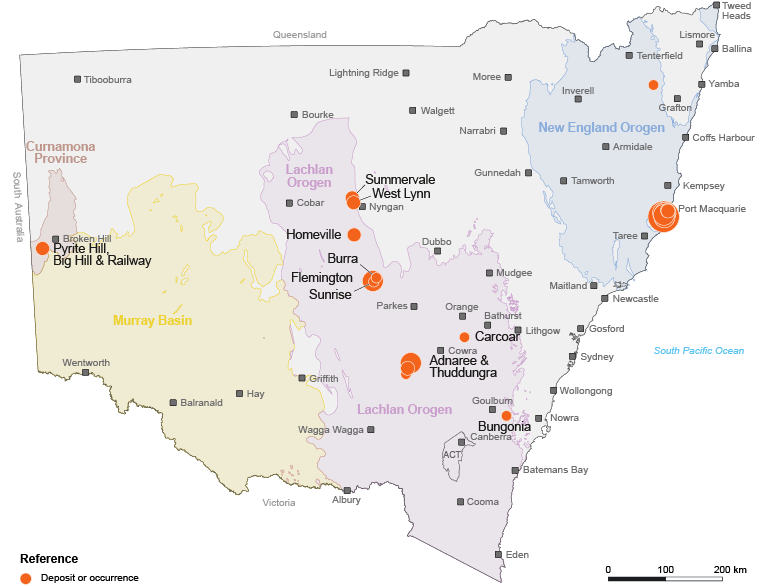
Download the Cobalt in NSW map (PDF, 3.1 MB).
Essential uses

Rechargeable batteries |

Electric vehicles |

Magnets |
| Superalloys | ||

Solar PV |

Wind turbines |

Aircraft |
Quality data for explorers
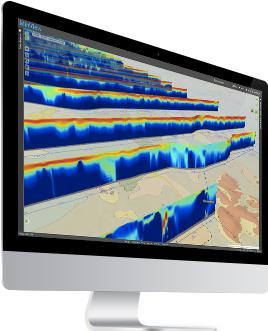
NSW is known for its world class pre-competitive data, and has a long history of providing geological, geoscientific and geochemical data to promote investment in exploration.
Pre-competitive data to support cobalt exploration (and other commodities) is made freely available on the Geological Survey of NSW’s web map application MinView.
The NSW Government recently completed its largest ever geophysical survey acquisition program through airborne electromagnetic, airborne magnetic and radiometric, gravity, and deep crustal reflection seismic surveys. These surveys collected over 150,000 km2 of new data across the New England Orogen, the Lachlan Orogen and the Murray Basin areas that are prospective for critical minerals and high-tech metals, including cobalt.
Global overview
The Democratic Republic of the Congo has 56% of the world’s known cobalt reserves and accounted for 76% world production, followed by Indonesia with 10%. in 2024 (Source: USGS).
Australia has 16% of the world’s known cobalt resources, second only to the DRC, but accounts for just 2% of world cobalt production.
Indonesia accounted for 10% of world cobalt production in 2024, largely as a by-product of nickel mining.
In 2024 China announced increases to cobalt refining capacity, almost doubling its metal capacity from 2023 (Source: USGS). China produced around 78% of the world’s refined cobalt (196.1 kt) in 2024, mostly from partially refined cobalt imported from the DRC (Source: IEA).
2024 Global cobalt reserves – 11 million tonnes cobalt content
2024 Global cobalt production – 290,000 tonnes cobalt content
Source for global overview content and charts: modified from USGS Mineral Commodity Summaries 2025.
NSW project highlights
NSW has multiple projects in development. The Broken Hill Cobalt Project and Sunrise Battery Materials Project are both well advanced and have downstream processing potential for Australia. Advanced exploration projects include Broken Hill East, Burra, Homeville, Flemington, NiCo Young and the West Lynn nickel–cobalt projects.
| Project (deposit) |
Contained cobalt (t) |
|---|---|
| Broken Hill Cobalt Project (Pyrite Hill, Big Hill & Railway) |
87,300 |
| Broken Hill East project |
21,556 |
| Burra (Owendale) |
21,360 |
| Fifield Project |
1,710 |
| Flemington (Syerston) |
3,786 |
| Homeville (Collerina) |
10,740 |
| NiCo Young (Ardnaree & Thuddungra) |
96,600 |
| Sunrise Battery Materials Project (Syerston) |
168,000 |
| West Lynn & Summervale |
10,650 |
| Total contained cobalt |
421,702 |
| Note: The contained cobalt totals are based on combined resources for that project (i.e. the amount of cobalt as a metal that is contained within one or more resources). Source: public company announcements. | |
Notes:
All percentages (including in the pie charts) are rounded to whole numbers.
Forecasts are based on NSW Resources’ interpretation of available information. Forecasts are inherently uncertain and should be seen as a guide only. Actual outcomes may be different.